LinkedIn Group Chat Auto Message
Save time and boost visibility with LinkedIn group chat automation. This tool helps you connect with group members through personalized messages, without repetitive manual tasks. Perfect for growing engagement at scale while maintaining a human touch in your outreach
Last updated
LinkedIn Group Chats have emerged as **powerful tools** for real-time discussions, collaboration, and networking among professionals. These chats are ideal for exchanging ideas, sharing resources, and fostering connections within niche communities. Whether it's brainstorming solutions to industry ch
LinkedIn Group Chats have emerged as powerful tools for real-time discussions, collaboration, and networking among professionals. These chats are ideal for exchanging ideas, sharing resources, and fostering connections within niche communities. Whether it's brainstorming solutions to industry challenges, coordinating initiatives, or promoting activities, LinkedIn Group Chats provide a direct and interactive platform to connect with like-minded professionals.
However, manually managing communication within group chats can be overwhelming, especially when dealing with routine tasks, large groups, or repetitive messaging needs. This is where TexAu’s LinkedIn Group Chat Auto Message tool steps in. By automating personalized connection requests and message sequences to group members, TexAu empowers professionals to streamline communication, drive engagement, and save loads of time while maintaining a personal touch.
TexAu’s smart sequences allow users to send effective messages tailored to the target audience, ensuring their communication is both relevant and impactful. For marketing teams and salespeople, this tool is a game changer that integrates seamlessly into their outreach efforts, offering flexible product options and enabling efficient lead-generation efforts.
Key Features of LinkedIn Group Chat Auto Message
Automated Group Chat Messaging: Simplify Outreach
TexAu eliminates the tedious task of manually messaging individual group chat members. With its automation tool, you can send personalized messages to multiple members directly within the group chat. This ensures efficient communication without sacrificing quality or relevance.
Example: A community manager moderating a digital marketing group chat uses TexAu to share a relevant resource with members who recently participated in a discussion:“Hi [First Name], I saw your input in the recent discussion about content marketing strategies. Here’s an article on advanced SEO techniques that might interest you: [Link]. Let me know what you think!”
Outcome: Members feel valued for their contributions and are more likely to engage further, strengthening group dynamics and boosting participation.
Customizable Message Templates: Add a Personal Touch
TexAu enables you to create message templates with placeholders for personalization, such as the recipient’s name, group name, or specific chat topics. This feature ensures that your outreach efforts feel tailored and professional, even when sent in bulk.
Example: A business owner participating in a tech innovations group chat sends personalized invitations to a product demo:“Hi [First Name], I noticed your comments in the [Group Name] chat about workflow automation. I’d love to invite you to a live demo of our new SaaS tool that simplifies task management. Here’s the link to register: [Link]. Hope to see you there!”
Outcome: Personalized connection requests drive higher engagement and foster a stronger connection between the sender and the recipient.
Targeted Messaging: Focus on the Right Members
Not all group chat members are equally relevant to your objectives. TexAu allows you to filter members based on their activity level, role, or location, ensuring your outreach messages reach the right audience.
Example: A recruiter in an IT professionals group chat filters members with job titles like “Software Engineer” or “Data Scientist” to share a job opportunity:“Hi [First Name], I noticed you’re active in the [Group Name] chat and your role aligns with an exciting opportunity we have for a Senior Software Engineer position. Let me know if you’d like more details!”
Outcome: This focused messaging strategy ensures that the recruiter connects with highly relevant candidates, increasing the chances of finding suitable talent quickly.
Bulk Messaging: Efficient Communication at Scale
TexAu’s bulk messaging feature allows you to reach multiple group chat members simultaneously, saving time while maintaining personalization. This is particularly useful for outreach campaigns, group-wide announcements, event promotions, or sharing updates.
Example: A training provider uses TexAu to announce a virtual webinar on leadership skills to an entire HR professionals group chat:“Hi [First Name], we’re excited to announce our upcoming webinar on ‘Leadership in the Digital Era.’ It’s happening this Thursday at 3 PM. Here’s the link to register: [Link]. We’d love to have you join us!”
Outcome: By sending bulk messages at scale, the training provider increases webinar attendance rates while saving hours of manual effort.
Scheduled Messaging: Optimize Timing for Engagement
Timing plays a crucial role in messaging effectiveness. TexAu lets you schedule message sequences to align with optimal times for member engagement, such as working hours or specific time zones.
Example: A marketer promoting a product launch schedules automated messages to group chat members a day before the event:“Hi [First Name], a quick reminder about our product launch event tomorrow at 2 PM. Don’t miss the live Q&A session with our experts! Here’s the link to join: [Link].”
Outcome: Timely reminders increase participation and ensure the message reaches members when they’re most likely to respond.
Message Tracking: Measure Success and Refine Strategies
TexAu provides tracking insights to monitor message delivery, open rates, and responses. This data helps you refine your messaging strategy for better results.
Example:
A content strategist tracks the response rates of a campaign shared in a content marketing group chat. They notice that follow-up messages sent two days later have a higher reply rate, prompting them to incorporate follow-ups as part of their messaging workflow.
Challenges Addressed
Manual Messaging in Group Chats
Managing group chats often involves sending individual or repetitive messages, especially in large groups. Manual messaging simplifies this task by automating the process of crafting and sending personalized messages to group members. This saves time and ensures that no one feels overlooked. By streamlining communication, it allows the group administrator or organizer to focus on fostering meaningful interactions instead of spending hours sending messages one by one.
Low Engagement
One of the most common challenges in group chats is low engagement, where members rarely interact or actively participate. With timely and relevant messaging, you can encourage group members to engage more effectively. Sending reminders, thought-provoking questions, or personalized updates helps stimulate conversations and make the chat environment more dynamic. This approach builds a sense of community and ensures that members feel valued and heard.
Missed Networking Opportunities
In large group chats, it’s easy to miss opportunities to connect meaningfully with members. By maintaining consistent and thoughtful communication, you can bridge this gap. Regularly reaching out to members with tailored messages—such as congratulating them on achievements, following up on shared interests, or inviting them to contribute to discussions—enhances the networking potential within the group. Such efforts build stronger relationships and make the chat more valuable for all participants.
Benefits of LinkedIn Group Chat Auto Message
Streamlined Communication: Save Time and Effort
TexAu automates repetitive messaging tasks, freeing up your time to focus on high-value activities like content creation or strategy development.
Example:
A community manager uses TexAu to send follow-up messages to all participants of a brainstorming session. Instead of spending hours messaging each member individually, they complete the task in minutes, allowing them to focus on planning future activities.
Enhanced Group Engagement: Boost Participation
Sharing valuable resources, insights, or event details through personalized messages encourages members to participate actively in group discussions.
Example:
A training consultant notices low participation in a group chat. They use TexAu to share a discussion thread about professional development tips, encouraging members to contribute their experiences. This sparks a flurry of replies and boosts group activity.
Effective Networking: Build Meaningful Connections
Personalized messages help you engage with group chat members, fostering stronger relationships and opening doors to new opportunities.
Example:
A freelancer in a graphic design group chat uses TexAu to follow up with members after a collaborative discussion:“Hi [First Name], I really enjoyed your insights during the recent chat on branding strategies. I’d love to connect and explore ways we could collaborate on future projects!”
Promotion of Events or Initiatives: Drive Participation
TexAu makes it easy to promote events, webinars, or campaigns to group chat members, ensuring maximum visibility and participation.
Example:
An event organizer uses TexAu to announce a panel discussion on future workplace trends to members of an HR-focused group chat. By sending personalized invitations, they double the attendance rate for the event.
Data-Driven Messaging: Refine Your Approach
With tracking insights, you can analyze the effectiveness of your messaging campaigns and adjust your approach to maximize results.
Example:
A marketer notices a high open rate for initial messages but a low response rate. They refine their follow-up message template to be more concise and action-oriented, leading to a significant improvement in responses.
Use Cases of LinkedIn Group Chat Auto Message
Marketers
Overview
Marketers can leverage LinkedIn Group Chats as a channel to share valuable resources, campaigns, and updates. By actively engaging with members in a relevant and personalized manner, marketers can increase brand visibility and establish themselves as thought leaders in their industry.
How to Use
- Content Sharing: Share whitepapers, infographics, or articles that address group interests.
- Campaign Announcements: Promote webinars, product launches, or surveys tailored to group themes.
- Discussion Initiation: Start conversations by sharing a piece of content that aligns with recent group discussions.
Example
A content marketer notices a group chat discussion about challenges in digital marketing. They share an infographic highlighting the latest trends and best practices in the field, sparking further discussion and engagement. This not only boosts visibility but positions the marketer as a resourceful contributor.
Recruiters
Overview
Recruiters can use group chats to connect with potential candidates by sharing job opportunities and engaging in industry-specific conversations. This direct approach enables faster sourcing and more meaningful connections with qualified talent.
How to Use
- Job Postings: Share open roles that align with the group’s industry or expertise.
- Personalized Outreach: Message candidates directly based on their activity in the group chat.
- Engagement with Influencers: Connect with active contributors who can refer other potential candidates.
Example
A recruiter actively monitors a group chat for IT professionals. They post about open developer roles, including a brief job description and application link. Within a week, they receive multiple qualified applications and successfully fill the position.
Community Managers
Overview
Community managers play a vital role in fostering participation and maintaining the vibrancy of group chats. By encouraging engagement and organizing activities, they can boost group involvement and build a sense of community.
How to Use
- Welcome Messages: Greet new members and guide them on how to participate.
- Event Invitations: Announce and invite members to group discussions, webinars, or brainstorming sessions.
- Acknowledging Contributions: Highlight valuable member inputs to encourage further participation.
Example
A community manager invites members of a professional writing group to join a virtual brainstorming session on “The Future of Content Marketing.” The session sees a 40% increase in participation, leading to valuable insights and stronger group cohesion.
Business Owners
Overview
Business owners can use group chats to share updates, gather feedback, and promote their products or services. By targeting relevant audiences, they can generate interest, attract early adopters, and establish brand authority.
How to Use
- Product Announcements: Introduce new offerings with a compelling message and call to action.
- Feedback Requests: Engage members by asking for their input on products or ideas.
- Special Offers: Share exclusive discounts or promotions to incentivize group members.
Example
A SaaS company founder shares details about their upcoming product launch in a tech-focused group chat. By highlighting the product’s unique features and inviting feedback, the founder gains early adopters and valuable insights for further development.
Best Practices
Keep Messages Relevant
Ensuring that your messages align with the group’s purpose and ongoing discussions is crucial for maintaining engagement. When crafting messages, consider the group’s niche, shared interests, and the current conversational tone. Avoid sending generic or off-topic messages, as these can reduce credibility and interest among members. Tailored messages show that you understand the group dynamics and are invested in providing value to the community.
Tip: Reference recent group topics, questions, or ongoing discussions to make your message feel timely and relatable. For example, if the group recently discussed productivity tools, you could share a relevant app or a tip aligned with that conversation.
Use Personalization
Personalizing your messages goes beyond just addressing members by their first name. It includes acknowledging their contributions, interests, or past interactions in the group. This fosters a deeper sense of connection and demonstrates that you are attentive to their involvement. Personalized messages are more likely to capture attention and elicit responses because they feel genuine and intentional.
Tip: Use dynamic placeholders such as [First Name], [Last Activity], or [Topic Discussed] when crafting messages. For instance, a message like, “Hi [First Name], I really appreciated your thoughts on [Topic Discussed]! Here’s a resource I think you’ll find helpful…” can create a stronger impact than a generic message.
Avoid Over-Messaging
While regular communication is essential, over-messaging can quickly lead to disengagement or frustration among members. Striking the right balance between keeping members informed and respecting their time is key. Each message should provide value, whether it’s a useful resource, an invitation, or relevant updates.
Tip: Space out messages by using analytics or scheduling tools to determine optimal times for outreach. Ensure your messages provide actionable value and avoid sending multiple messages in quick succession unless absolutely necessary. For example, weekly updates or bi-weekly check-ins work better than daily messages.
Advanced Features
Keyword-Based Targeting
By analyzing the specific keywords used in group discussions, you can identify members who have a natural interest in certain topics. This feature allows you to craft messages that cater directly to their interests, ensuring relevance and increasing the likelihood of engagement.
Example: If a member mentions “freelance opportunities” in a discussion, send them a curated list of freelancing platforms or opportunities.
Tip: Combine keyword targeting with automation to create a seamless process for identifying and reaching out to members based on their contributions.
Activity-Based Messaging
Active members are the backbone of any group chat. They’re more likely to engage with messages because they’ve already demonstrated interest and involvement. Focusing on these contributors not only increases response rates but also strengthens relationships with the group’s core participants.
Example: Send a thank-you message to members who frequently comment or post, inviting them to share their expertise in a dedicated discussion or event. For less active members, a message like, “We noticed your interest in [Topic]—would love your input in our upcoming session!” can encourage re-engagement.
Tip: Use engagement metrics to identify your most active members and tailor your communication strategies accordingly.
Follow-Up Automation
Follow-up messages are critical for re-engaging members who may have overlooked your initial outreach. Automated follow-ups save time while ensuring consistent communication. They’re particularly effective for reminders or event promotions, where timing is key.
Example: If a member hasn’t responded to your initial message about an event, send a follow-up like, “Hi [First Name], just wanted to remind you about [Event/Topic] happening on [Date]. Let us know if you can make it!”
Tip: Space follow-ups thoughtfully—avoid sending reminders too frequently. A gap of 2-3 days between follow-ups works well for most cases.
Tips for Maximizing Results
Engage in Context
Aligning your messages with current conversations or trending topics in the group ensures your communication feels timely and relevant. This not only boosts engagement but also positions you as an active and attentive participant in the community.
Tip: Use group analytics or manual monitoring to identify hot topics. For instance, if the group is buzzing about a recent webinar, share related resources or start a follow-up discussion.
Keep Messages Concise
Group members often receive multiple messages daily, so keeping your communication concise is crucial for capturing attention. A well-crafted, short message delivers your point effectively while respecting the recipient’s time.
Tip: Aim for 2-3 sentences per message. For example, instead of writing a long paragraph, summarize key points and provide a link or attachment for further details.
Follow Up Strategically
Strategic follow-ups ensure that interested members stay engaged without feeling pressured. Instead of generic reminders, use data-driven insights to customize follow-ups based on member behavior, such as non-responses or partial engagement.
Tip: Use tools to analyze member activity and schedule follow-ups during times when they are most likely to respond. For example, a gentle nudge like, “Just circling back—let me know if you’d like more details about [Topic/Event],” keeps the tone friendly and approachable.
Conclusion: Elevate Your LinkedIn Group Chat Engagement
TexAu’s LinkedIn Group Chat Auto Message tool simplifies communication, drives engagement, and fosters meaningful connections. Whether you’re a marketer, recruiter, community manager, or business owner, this tool ensures efficient and impactful communication in LinkedIn Group Chats.
The LinkedIn Group Chat Auto Message automation enables you to send targeted messages to members in LinkedIn group chats. Designed for founders, companies, sales managers, marketers, and growth hackers, this automation streamlines engagement and builds professional connections at scale. Use TexAu’s desktop app or export data to Google Sheets for better management. Automate with scheduling, iteration delays, and flexible configurations for efficient outreach.
Step 1: Log in to TexAu and Connect LinkedIn
Log in to your TexAu account at the TexAu V2 Desktop app.
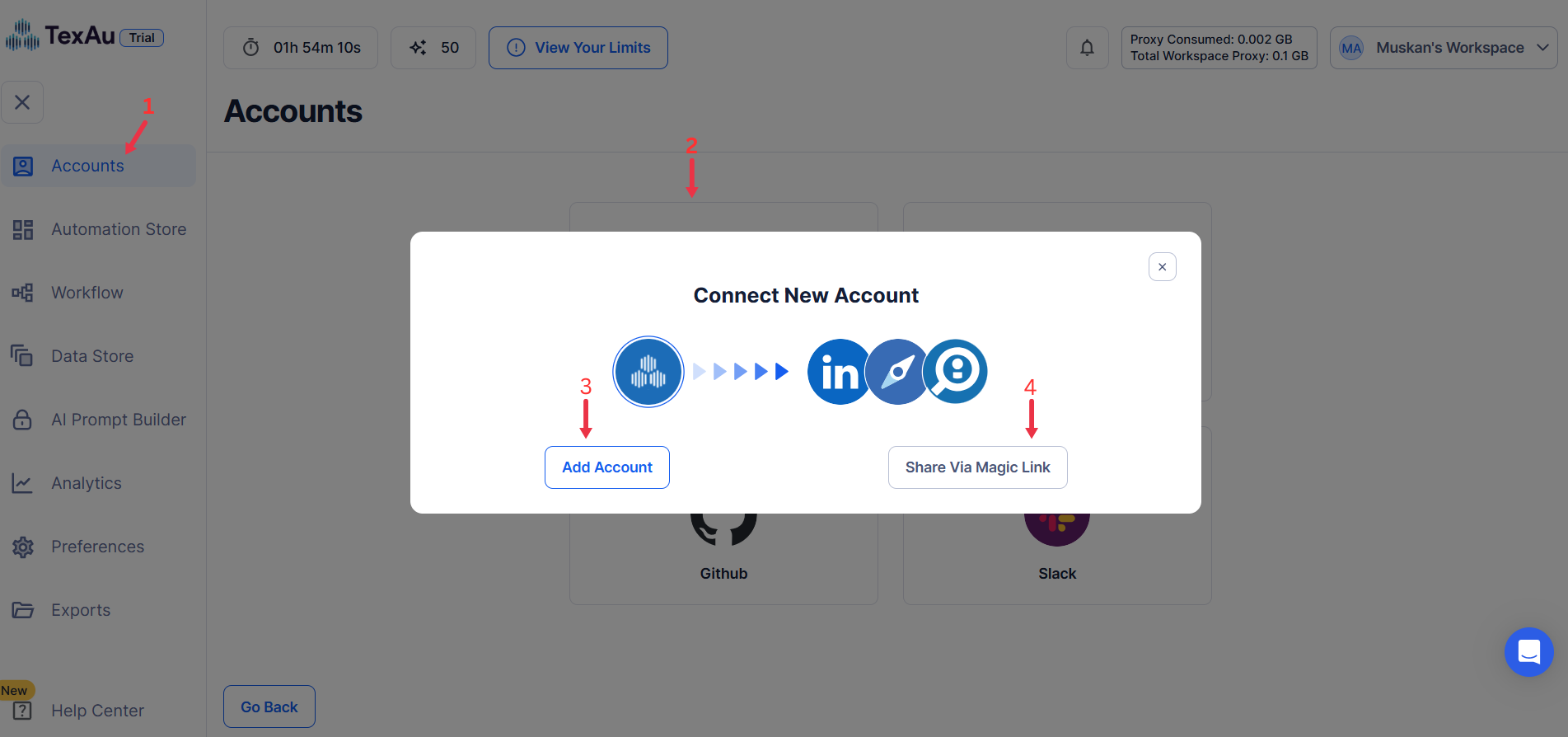
Go to Accounts and connect your LinkedIn account. You can choose one of these methods:
- Share via Magic Link: Share the link, copy it to your browser, and follow the steps to integrate your LinkedIn account securely.
- Add Account: Sync cookies and browser data with TexAu for seamless integration.
Tip: Use Magic Link for an easy and secure connection.
Step 2: Run it on your machine
Decide how you want to run the automation:
- Runs automation on your local device using your IP address.
Tip: Running locally uses your own IP and browser session, which is the safest way to automate an account you care about.
Step 3: Search for the Particular LinkedIn Automation
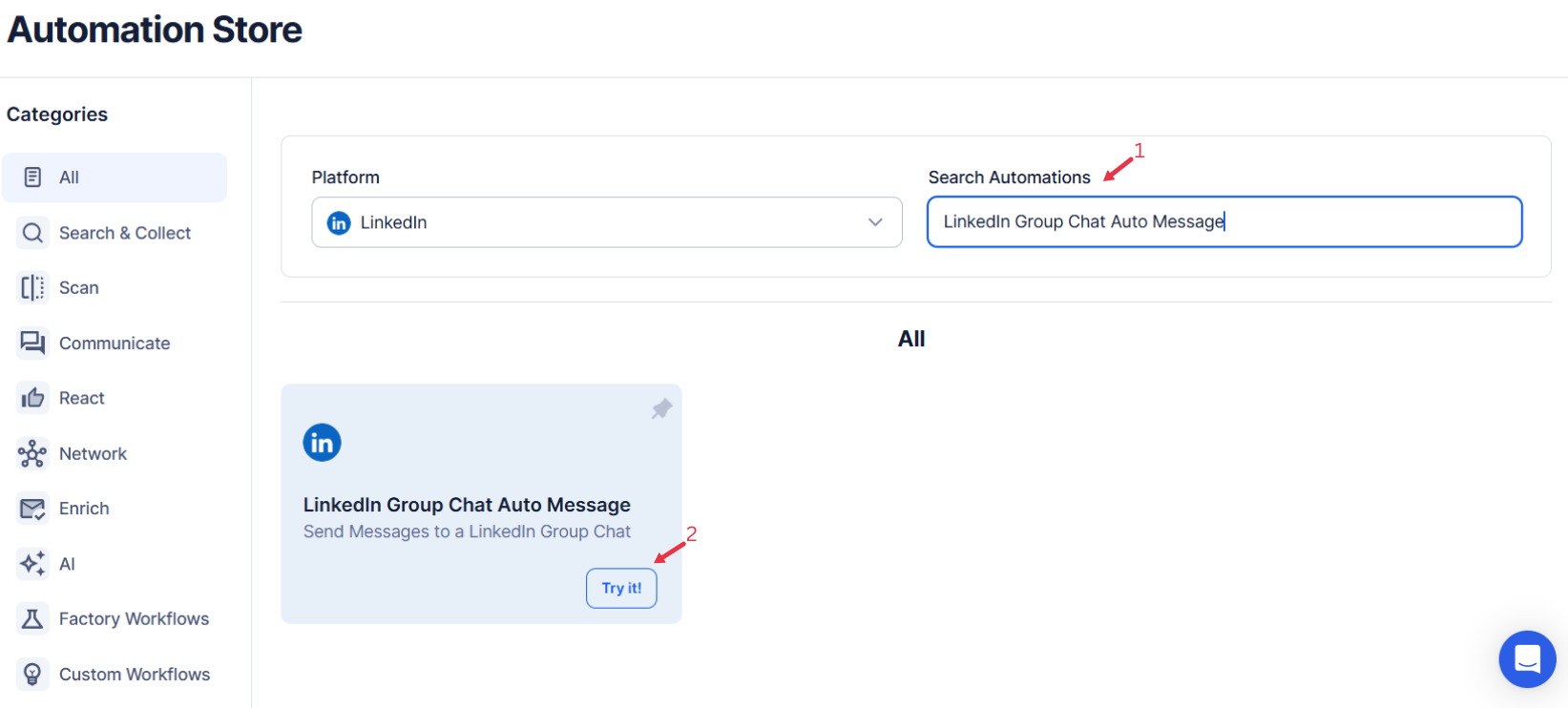
- Navigate to the Automation Store on TexAu.
- Use the search bar to find LinkedIn Group Chat Auto Message automation.
Step 4: Select Your Input Source
Here’s how to configure your input source for the LinkedIn Group Chat Auto Message automation:
Manually Enter a Single Input
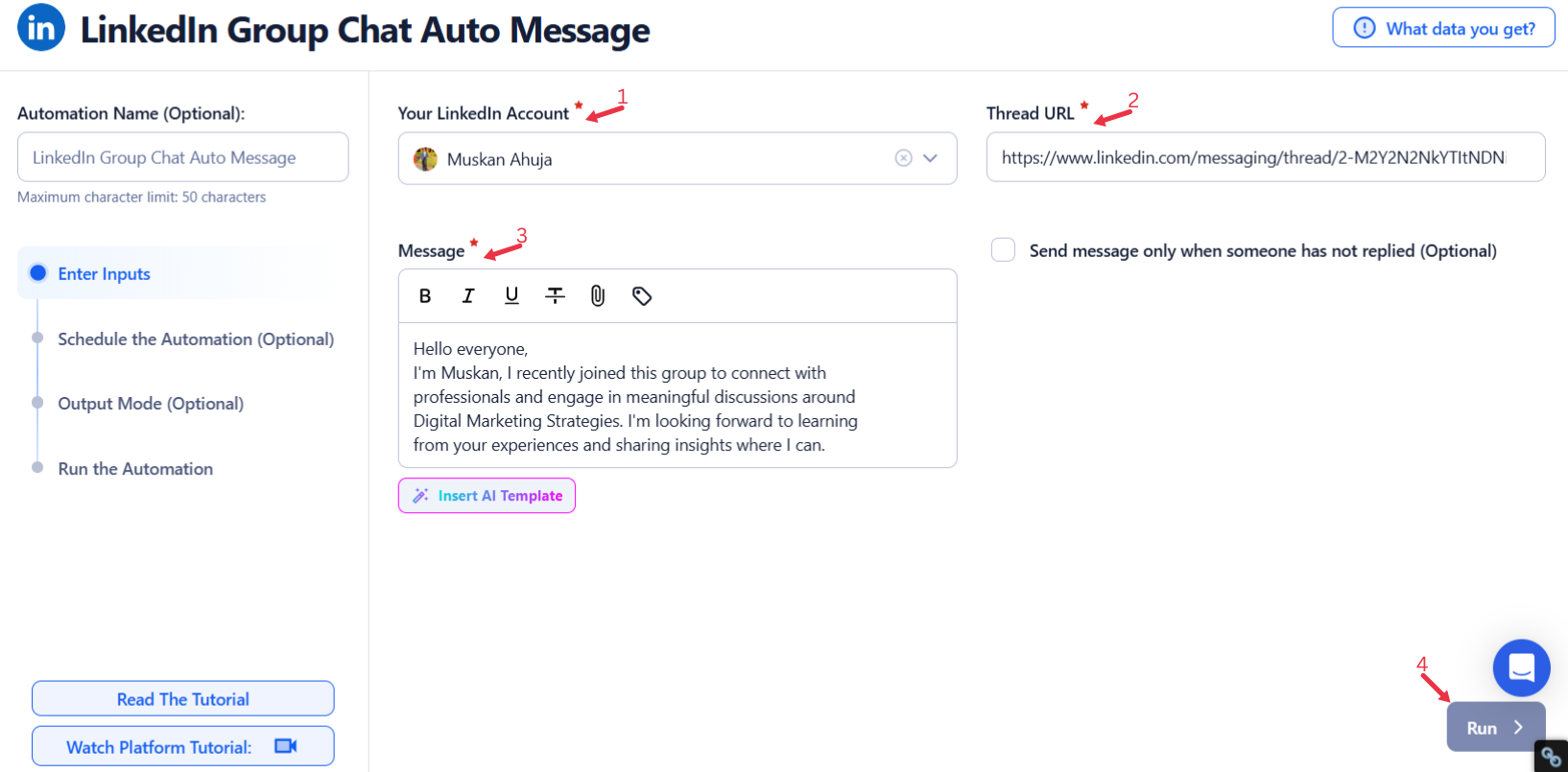
Use this option to send messages in a single LinkedIn group chat thread. Follow these steps:
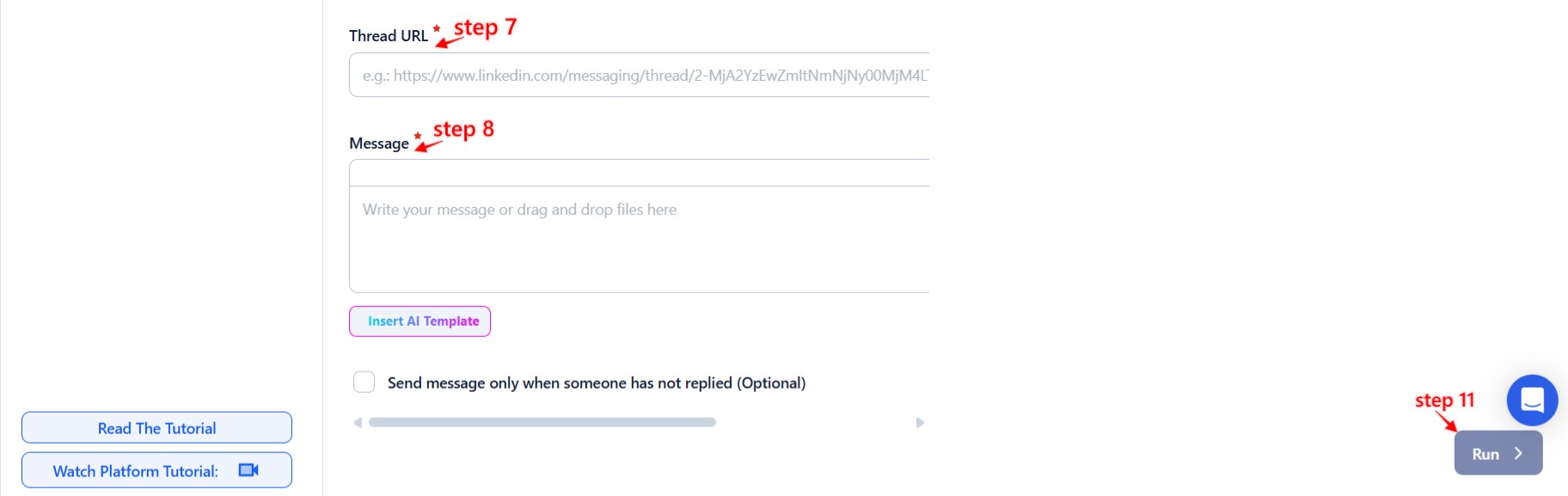
- Enter the Thread URL directly into the input field. This is the specific LinkedIn group chat you want to target.
- Message Input: In all cases, enter your message in the Message input field. You can use plain text, insert an AI-generated template, or drag and drop files for attachments.
- Reply Detection (Optional): Enable this to detect replies and automatically stop sending further messages to the same thread.
- Click Run in the lower-right corner to start the automation.
Google Sheets
This option is perfect for messaging participants in multiple LinkedIn group chat threads. Follow these steps to use Google Sheets:
-
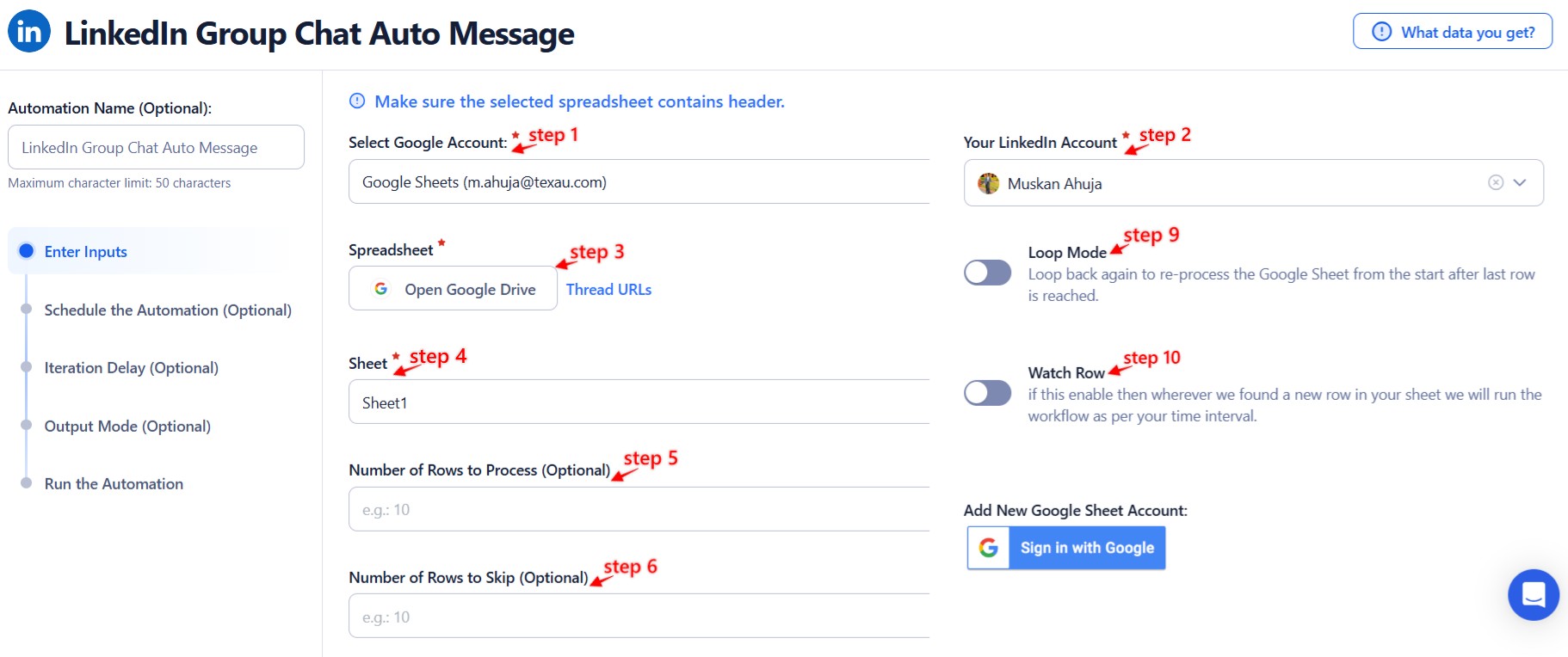
Click Select Google Account to choose your Google account or click Add New Google Sheet Account (you can add multiple Google accounts).
-
Click Accounts to select LinkedIn as the platform.
-
Click Open Google Drive to locate the Google Sheet containing LinkedIn thread URLs. A pop-up will display your Google Drive files.
-
Select the spreadsheet and the specific sheet (e.g., "Sheet1") containing the LinkedIn thread URLs.
-
Thread URL: Choose the column header containing LinkedIn Thread URLs. This step is mandatory for the automation to function correctly.
-
Configure additional options:
-
Number of Rows to Process (Optional): Define how many rows to process from the sheet.
- Number of Rows to Skip (Optional): Specify how many rows to skip at the beginning of the sheet.
- Loop Mode (Optional): Enable this to re-process the Google Sheet from the beginning once all rows are completed. This is useful for recurring updates or new entries in the sheet.
-
Message Input: In all cases, enter your message in the Message input field. You can use plain text, insert an AI-generated template, or drag and drop files for attachments.
-
Reply Detection (Optional): Enable this to detect replies and automatically stop sending further messages to the same thread.
-
Click Run in the lower-right corner to start the automation.
Optional Advanced Feature:
- Loop Mode: Enable Loop Mode to re-process the Google Sheet from the beginning once all rows are completed. This is useful for tasks that require recurring updates.
Watch Row (Optional)
Watch Row feature monitors Google Sheets for new data and automatically executes workflows when updates are detected.
Customize Watch Row by selecting a frequency and defining an execution period.
Watch Row Schedule
- None
- Scheduling Intervals (e.g., every 15 minutes, every hour)
- One-Time Execution
- Daily Execution
- Weekly Recurrence (e.g., every Monday and Saturday)
- Monthly Specific Dates (e.g., 11th and 29th)
- Custom Fixed Dates (e.g., October 20)
By default, Watch Row executes every 15 minutes and remains active for five days unless adjusted.
With Watch Row, TexAu simplifies workflow execution.
CSV File
This option allows you to send messages to multiple LinkedIn group chat threads using a static list of Thread URLs. Follow these steps:
- Click Upload CSV File and browse to locate the file containing LinkedIn Thread URLs.
- Once uploaded, TexAu will display the file name and preview its content. Verify the data to ensure it’s correct.
- Thread URL: Choose the column header containing LinkedIn Thread URLs. This step is mandatory for the automation to work properly.
- Configure additional options:
- Number of Rows to Process (Optional): Specify how many rows to process from the CSV file.
- Number of Rows to Skip (Optional): Set how many rows to skip from the beginning of the file.
- Message Input: In all cases, enter your message in the Message input field. You can use plain text, insert an AI-generated template, or drag and drop files for attachments.
- Reply Detection (Optional): Enable this to detect replies and automatically stop sending further messages to the same thread.
- Click Run in the lower-right corner to start the automation.
Screenshot Suggestion: Highlight the Input Source selection screen with the CSV file upload feature, preview window, Thread URL column header selection, and fields for rows to process and rows to skip.

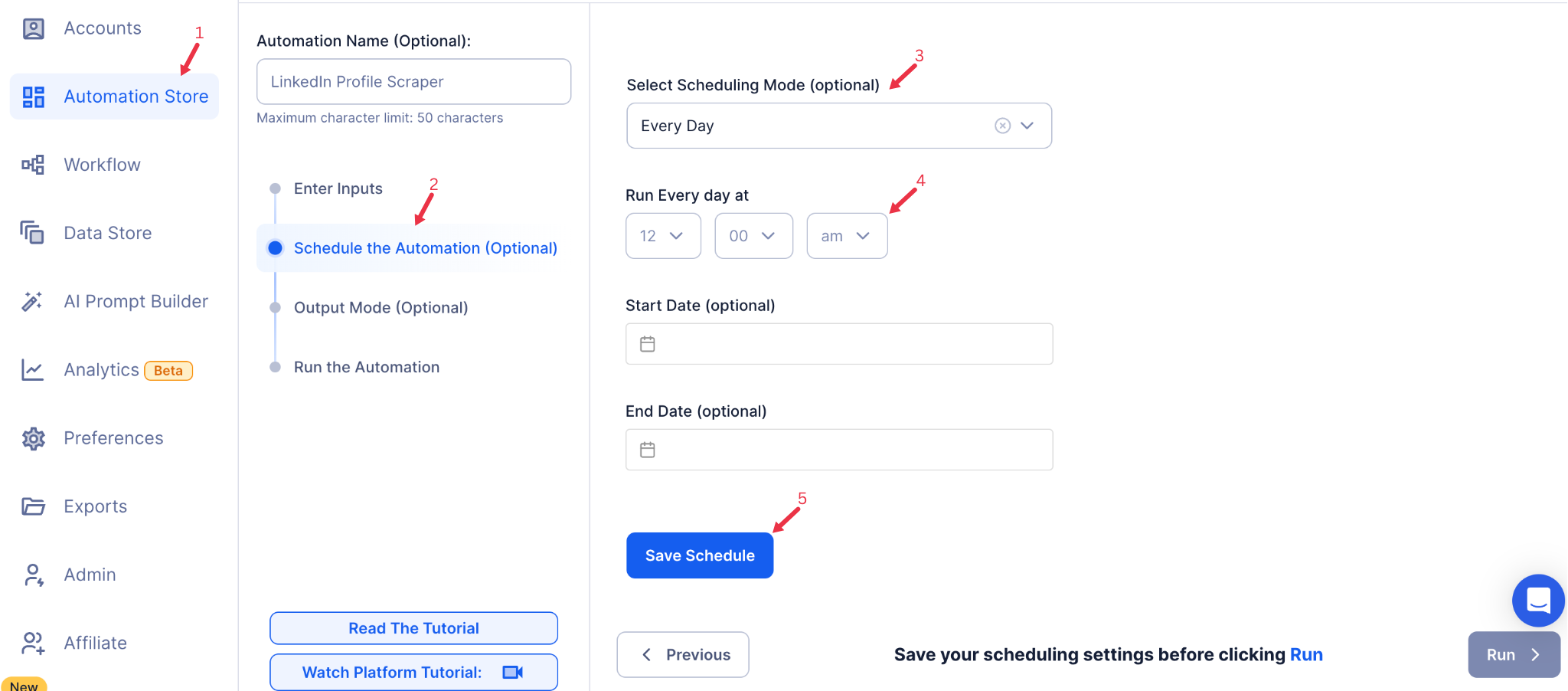
Step 5: Schedule the Automation (Optional)
Automate message delivery at specific times by scheduling the automation. Click Select Scheduling Mode and choose from:
- None: Run the automation immediately.
- At Regular Intervals: Schedule recurring automation (e.g., daily or weekly).
- Once: Set the automation to run at a specific time.
- Every Day: Automate messages daily.
- On Specific Days of the Week: Select days such as Monday and Wednesday.
- On Specific Days of the Month: Choose specific dates like the 1st and 15th.
- On Specific Dates: Schedule automation for custom dates, like March 10.
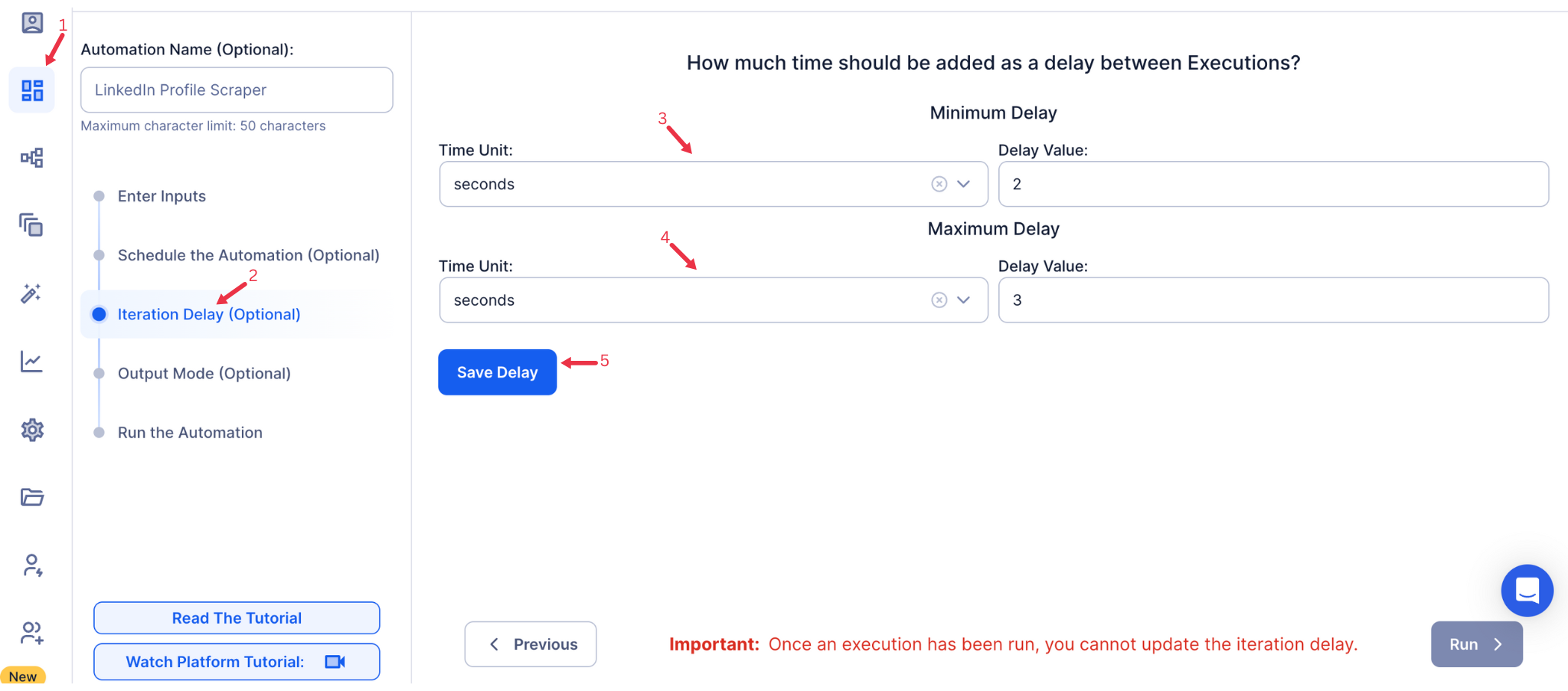
Step 6: Set an Iteration Delay (Optional)
Avoid detection and simulate human-like activity by setting an iteration delay. Choose minimum and maximum time intervals to add randomness between actions. This makes your activity look natural and reduces the chance of being flagged.
- Minimum Delay: Enter the shortest interval (e.g., 10 seconds).
- Maximum Delay: Enter the longest interval (e.g., 20 seconds).
Tip: Random delays keep your automation safe and reliable.
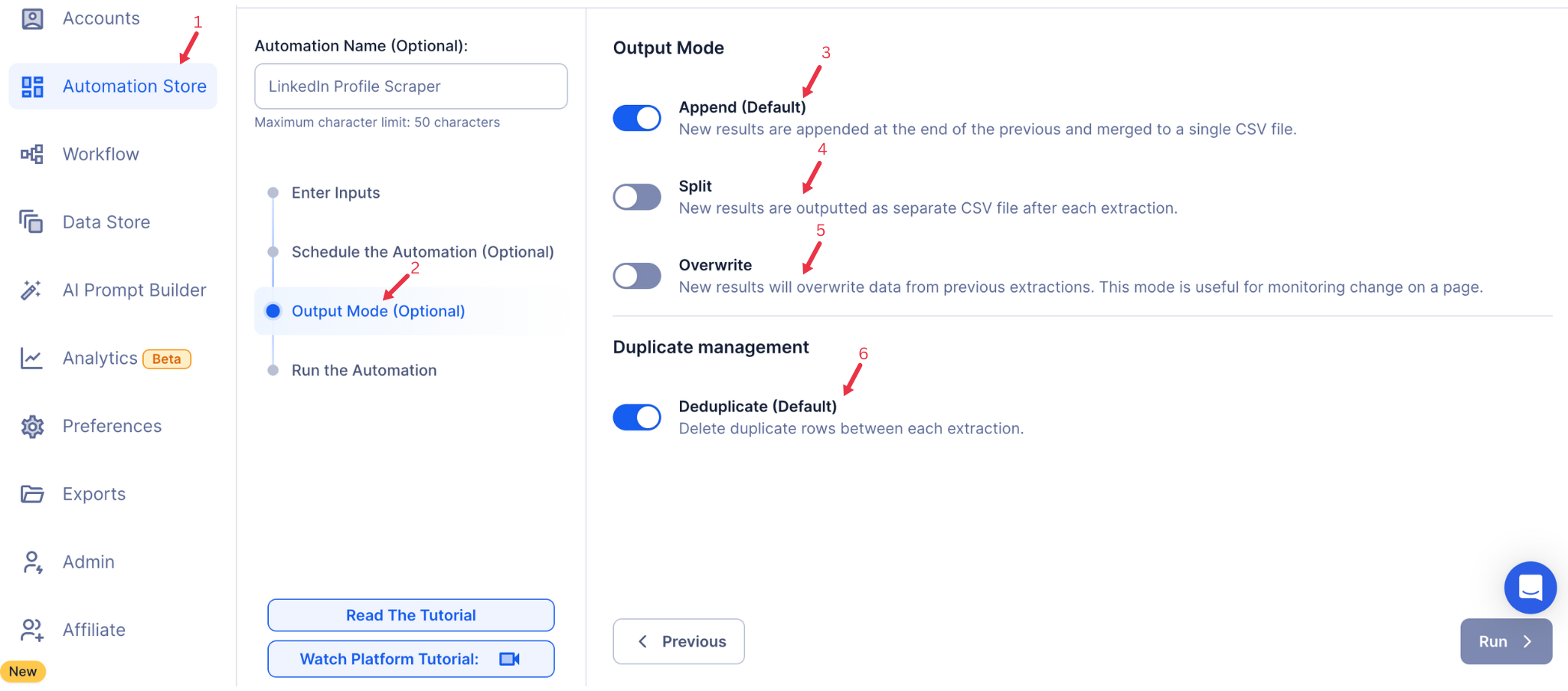
Step 7: Choose Your Output Mode (Optional)
Choose how to organize and save the results of your automation. Options include:
- Append: Add new results to an existing file.
- Split: Save results from each automation run into a new file.
- Overwrite: Replace previous results with new data.
- Duplicate Management: Enable Deduplicate to automatically remove duplicate entries for clean data.
Step 8: Access the Data from the Data Store
After completion, navigate to the Data Store in TexAu to view and manage your results. Locate the LinkedIn Group Chat Auto Message automation or the name you assigned, click See Data, and choose:
- Download CSV: Export results for offline analysis.
- Open to Google Sheet: Access the data directly in Google Sheets for seamless management.

The LinkedIn Group Chat Auto Message automation simplifies group engagement by sending personalized messages to group chat members efficiently. With scheduling, iteration delays, and flexible input options, founders, marketers, and sales teams can streamline outreach while saving time. Export results to Google Sheets or CSV files for easy tracking and future planning. Save time and enhance communication with TexAu.
Run this automation on your own machine.
TexAu V2 Desktop runs every automation locally — your real session, your real IP, unlimited hours, no proxies. One-time $1,999, no subscription, 5 years of updates.